
Laser Hair Removal in Australia: Why the Rulebook Changes at State Lines
Most laser hair removal advice in Australia comes from clinics selling you a booking. This independent guide covers the real science, which laser suits your skin type, and what Australian regulations actually require of operators.
- laser hair removal
- skin types
- Fitzpatrick scale
- Australian regulations
- cosmetic procedures
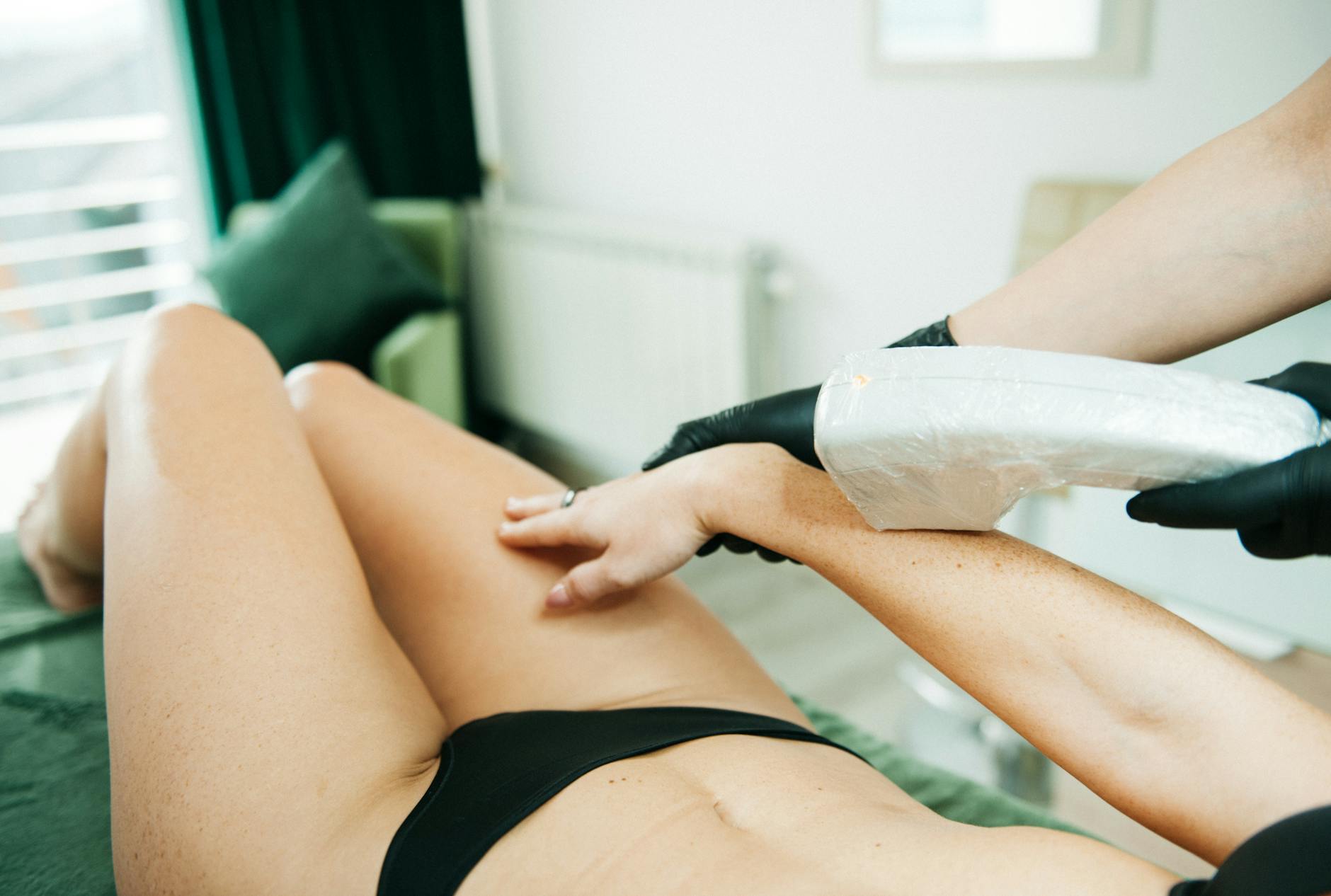
Laser Hair Removal in Australia: Why the Rulebook Changes at State Lines
Try researching laser hair removal online and you will notice a pattern: nearly every result is a clinic page dressed up as education, written to funnel you toward a booking. Independent information on a procedure this popular is surprisingly thin on the ground.
Popular is putting it mildly. Australia's laser hair removal market was worth $1.84 billion in 2023 and is on track to reach $2.82 billion by 2030, according to Grand View Research. For an industry that size, you might expect a clear national rulebook covering who gets to point a Class 4 laser at your skin. There isn't one. What exists instead is a patchwork that changes at every state line, and a technology choice that matters more than the brochure lets on.
The Physics, and Why Hair Colour and Skin Colour Are Doing All the Work
Laser hair removal works on a principle researchers Anderson and Grossman called selective photothermolysis. Wavelengths of light in the 600 to 1200 nanometre range are absorbed by melanin, the pigment sitting in your hair follicle. Absorption converts light into heat, and the heat damages the stem cells in the hair bulge. No stem cells, no new hair.
Which is also why hair colour governs results. Very light blonde, red, or grey hair responds poorly because there is not enough pigment for the laser to find. And it is why skin colour dictates which laser you can safely use: melanin in the skin absorbs the same wavelengths as melanin in the hair, and a laser that targets follicular pigment on fair skin can burn a darker epidermis instead.
Hair grows in three phases: anagen (active), catagen (transition), and telogen (resting). The laser only catches hair in the anagen phase, and only a fraction of your hair is anagen at any one time. That is why a full course typically runs six to eight sessions spaced four to six weeks apart. Data published by Laser Clinics Australia in 2025 put the realistic ceiling at around 80% permanent hair reduction after six to twelve treatments. Note the phrasing: "permanent reduction," not "permanent removal." Any clinic that claims otherwise is writing marketing copy.
Laser vs IPL
The distinction matters. A laser uses a single focused wavelength. IPL (intense pulsed light) uses a broad spectrum scattered over a wider area. They are not the same technology, and they do not produce the same results. A comparative study in Dermatologic Surgery found alexandrite laser achieved around 46% long-term hair reduction against IPL's 27%. IPL is cheaper per session but needs more of them, which closes the cost gap quickly.
On darker skin, IPL also carries a higher burn risk. Broad-spectrum scatter is absorbed by epidermal melanin more readily than a targeted wavelength, which is why Nd:YAG laser, not IPL, is the correct pick for Fitzpatrick types IV to VI.
Skin Type Dictates the Tool
The Fitzpatrick phototype scale was originally built for UV research, not laser treatment. It has since become the single most important input into laser selection. Six types, classed by how your skin responds to sun:
- Type I. Very fair skin; always burns, never tans.
- Type II. Fair skin; burns easily, tans minimally.
- Type III. Medium skin; sometimes burns, tans gradually.
- Type IV. Olive or light brown skin; rarely burns, tans easily.
- Type V. Brown skin; very rarely burns, tans darkly.
- Type VI. Deeply pigmented skin; never burns.
Know where you sit on the scale before you walk in the door. A reputable clinic will assess Fitzpatrick type at consultation; if they skip that step, that tells you something.
Data from Rao and Goldman, published in the Journal of Cosmetic and Laser Therapy, maps wavelength to skin type:
| Laser Type | Wavelength | Best for Skin Types | Mean Hair Reduction | Pigmentation Risk |
|---|---|---|---|---|
| Alexandrite | 755 nm | I to III | 65.6% | Higher (up to 19%) |
| Diode | 800 to 810 nm | I to IV | 46.9% | Moderate |
| Nd:YAG | 1064 nm | IV to VI | 42.4% | Lower (2 to 3%) |
Alexandrite (755 nm) is the most effective option for fair to light-medium skin. Strong melanin absorption gives it precision, and that same property is exactly what makes it risky on darker skin.
Diode (800 to 810 nm) is the middle-ground compromise, trading some precision for deeper penetration. It is what most clinics default to, because it covers the widest slice of the Fitzpatrick chart safely.
Nd:YAG (1064 nm) is the safest laser for darker skin. Its longer wavelength skips past epidermal melanin and reaches the follicle directly. The trade-off is a slightly lower hair-reduction rate in exchange for a dramatically lower risk of pigmentation change, which is the correct priority for Fitzpatrick IV to VI.
If your skin is type I to III, ask about alexandrite or diode. Type III to IV, diode is the safe default. Type IV to VI, insist on Nd:YAG.
Dark Skin: The Right Laser Exists, but You Have to Ask for It
The risk on darker skin is epidermal injury. Melanin in the skin absorbs laser energy intended for the follicle, producing burns, blistering, or post-inflammatory pigmentation change. Nd:YAG cuts that risk substantially because its 1064 nm wavelength penetrates past the pigmented epidermis. Operators treating Fitzpatrick IV to VI should also drop the fluence, lengthen the pulse duration, and extend cooling time. Research in the Journal of Drugs in Dermatology confirms Nd:YAG is both effective and safe for these skin types when the settings are matched.
If a clinic uses the same laser on every client regardless of skin colour, that is not a safety protocol. It is a business model.
The Real Risks, and How to Lower Them
A 2024 study in the Journal of Cosmetic Dermatology put the overall complication rate at roughly 0.69% when laser hair removal is performed by trained professionals using appropriate equipment. The most common after-effects are expected and self-limiting: redness, mild swelling, warmth. These resolve within hours and are a normal tissue response, not a complication.
Among actual complications recorded at specialist dermatology centres, petechia and purpura account for around 31.66% and pigmentation changes for around 20%. Rarer and more serious outcomes include blistering, crusting, dyspigmentation, and, in unusual cases, scarring. Paradoxical hypertrichosis (increased hair growth after treatment) is documented, more often in Fitzpatrick type III patients and more often with IPL than with lasers.
Almost every one of these outcomes is preventable. Correct laser for the skin type, correct fluence and spot size, active cooling during treatment, and a properly trained operator are what separate a clean course from a bad one. ARPANSA classifies cosmetic lasers as Class 3B or Class 4 devices, the same hazard class as industrial lasers. That classification is not regulatory theatre.
Questions to Bring to the Consultation
- Which laser does the clinic use? You now know why this matters for your Fitzpatrick type.
- What training does the operator have? Ask about qualifications, not years of experience.
- Do they assess Fitzpatrick type before treatment? If the answer is no, leave.
- What cooling technology is in use? Proper cooling cuts the side-effect rate sharply.
- What is the adverse-event protocol? A reputable clinic will have one and tell you about it.
On the practical side: shave the treatment area 12 to 14 hours before the appointment, and avoid sun exposure for two weeks prior. Any reputable clinic will patch-test first and discuss risks in detail before committing you to a full course.
The Rulebook Changes at the Border
Here is where Australia gets peculiar. There is no national framework governing who can operate a cosmetic laser. Your legal protection depends entirely on which state you happen to be in.
Dermatologists have the broadest scope of practice everywhere. Nurses can operate lasers under medical supervision. Dermal clinicians with a health science degree can often use lasers independently. Beauty therapists can perform basic laser hair removal in most states but face restrictions on advanced procedures. That hierarchy sounds orderly; state-by-state enforcement is not.
Queensland is the strictest jurisdiction. Class 4 laser operators must hold a use licence, complete a Laser Safety Certificate and an Infection Prevention Control Certificate, and log 25 to 100 supervised practical hours depending on the procedure.
Western Australia requires mandatory operator training and salon licensing for laser treatments.
Tasmania is the only state that specifically regulates IPL alongside lasers for cosmetic use.
New South Wales, Victoria, and South Australia have no specific regulations on who can operate a cosmetic laser. General workplace health and safety laws apply. There is no dedicated licensing or training requirement.
The ACT and Northern Territory have no formal licensing, though safety training is encouraged.
The gap is worth stating plainly. In several states, nothing in law stops an untrained person from operating a Class 4 laser on your skin. Knowing that before you book is the difference between an informed decision and a gamble.
What the 2025 AHPRA Changes Actually Do
In September 2025, AHPRA released updated guidelines tightening safeguards for non-surgical cosmetic procedures, including laser treatments performed by registered health practitioners. The move followed an investigation into roughly 360 notifications about non-surgical cosmetic procedures between September 2022 and March 2025. Legal analysis from Clayton Utz called it a "significant regulatory overhaul" and flagged the new mandatory cooling-off periods and tighter advertising restrictions.
One caveat matters. AHPRA guidelines apply only to registered health practitioners: doctors, nurses, dentists. Unregistered operators, who make up a large share of the laser hair removal industry, sit outside AHPRA and under state or territory codes of conduct (the NSW Health Care Complaints Commission code, for example). Your protection still varies with where you are and who is holding the laser.
A laser safety certificate is the minimum requirement across Australia for insurance. That is a floor, not a ceiling. Ask for it anyway.
What It Costs, and Why Price Is the Wrong Question
Costs swing on treatment area, number of sessions, and laser type. According to Yellow Pages Australia (2025), smaller areas like the upper lip or underarms run $15 to $300 per session. Larger areas, such as a full Brazilian, range from $150 to $450 per session or more.
Most people need six to eight sessions. For underarms, a full course therefore lands somewhere between $90 and $2,400. A full Brazilian course is closer to $900 to $3,600 or more. Package deals tend to bring the per-session price down, so ask.
Price is the wrong variable to optimise. Operator qualifications, laser type, and safety protocol matter far more than a few dollars a session. The wrong laser on the wrong skin type, or an undertrained operator, can produce complications that cost significantly more to repair than any package discount could ever save. If you are researching cosmetic procedures more broadly, our other guides on choosing a qualified practitioner and understanding AHPRA compliance cover these topics in more detail.
The Short Version
Laser hair removal is safe and effective when the technology, the operator, and the questions you ask at consultation all line up. Three things to take with you: understand the physics well enough to spot marketing spin, match the laser to your Fitzpatrick type, and check your operator's qualifications against the regulatory reality in your state.
A good clinic welcomes the questions. A clinic that doesn't, isn't.
Required Disclaimer
This content is for general educational purposes only and does not constitute medical advice, diagnosis, or treatment. Always consult a qualified, AHPRA-registered health practitioner before undergoing any cosmetic procedure. Individual results vary; outcomes shown or described may not reflect your experience. All cosmetic procedures carry risks.
Sources
- Laser Hair Removal, StatPearls, NCBI Bookshelf (accessed 2026-02-27)
- Laser Fitzpatrick Skin Type Recommendations, StatPearls (accessed 2026-02-27)
- Nd:YAG Laser Hair Removal in Fitzpatrick Skin Types IV to VI (accessed 2026-02-27)
- Laser hair removal: comparison of Nd:YAG, alexandrite, and diode lasers (accessed 2026-02-27)
- Adverse Events of Light-Assisted Hair Removal: An Updated Review (accessed 2026-02-27)
- Laser hair removal complications at a tertiary dermatology center (accessed 2026-02-27)
- A review of the adverse effects of laser hair removal (accessed 2026-02-27)
- Australia Laser Hair Removal Market Size Report, 2030 (accessed 2026-02-27)
- AHPRA: New guidelines for cosmetic procedures (September 2025) (accessed 2026-02-27)
- AHPRA: Booming billion-dollar cosmetic industry on notice (June 2025) (accessed 2026-02-27)
- Navigating the 2025 AHPRA Guidelines, Clayton Utz (accessed 2026-02-27)
- State-By-State Guide to Cosmetic Laser Regulations, Professional Beauty (accessed 2026-02-27)
- Laser and IPL Regulations Australia, Alma Lasers (accessed 2026-02-27)
- ARPANSA: Lasers (accessed 2026-02-27)
- Laser regulations for specific Australian states, Bravura Education (accessed 2026-02-27)
- ARPANSA: Advice for providers on lasers and IPL for cosmetic treatments (accessed 2026-02-27)
- How much does laser hair removal cost?, Yellow Pages Australia 2025 (accessed 2026-02-27)
- Laser Hair Removal Regulations in Australia, Essential Beauty (accessed 2026-02-27)
Photo by Pexels User on Pexels