
Anti-Wrinkle Injections Explained: What Botulinum Toxin Does, What It Costs, and How to Choose a Practitioner
Anti-wrinkle injections are Australia's most common cosmetic procedure — and the most over-sold. Here's what botulinum toxin actually does, the dose and duration evidence, real side-effect rates, what it should cost, and how to choose a practitioner.
- anti-wrinkle injections
- botulinum toxin
- cosmetic injectables
- AHPRA
- patient safety
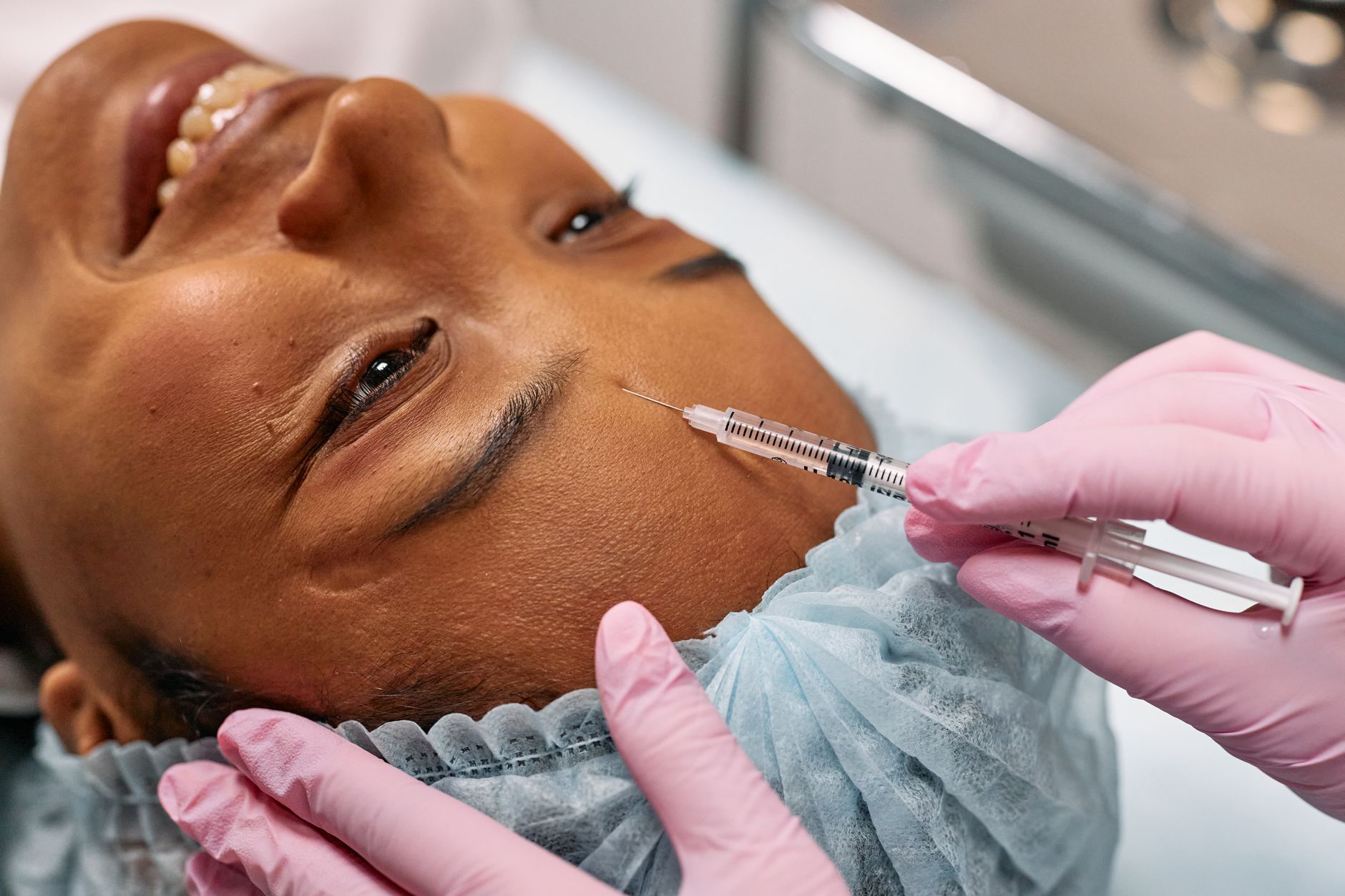
Anti-Wrinkle Injections Explained: What Botulinum Toxin Does, What It Costs, and How to Choose a Practitioner
By the Cosmabl Clinical Editorial Team. Medically reviewed by Dr Patrick Shively, Medical Director, AHPRA MED0001794908.
Last reviewed 2026-05-16 • Next review 2027-05-16
Anti-wrinkle injections are the most common cosmetic medical procedure in Australia. The Therapeutic Goods Administration’s data on cosmetic injectables, and Grand View Research’s sizing of the Australian facial-injectable market at USD 410.6 million in 2024, both reflect a category that has moved a long way from its medical origins. Most people who book one now are not patients in any conventional sense. They are consumers, often researching the procedure extensively, often arriving at the consultation having already decided.
That makes the consultation harder, not easier. The molecule is well-studied. The technique is well-described. What is less well-explained — because it does not sell anything — is what an honest version of this treatment actually looks like over time. In other words, questions like how much you should be receiving, how often should you receive treatment, what good practice looks like when you are 26 years old versus 46 years old, how to read the difference between a practitioner who is restrained and one who is using a menu, etc…
This article is the version we wish more clinics published. It describes what botulinum toxin type A actually is, what it does to facial muscles, what the published evidence supports on dose and duration, the side-effect numbers a patient is entitled to know, what it should cost, and what the September 2025 AHPRA cosmetic guidelines now require of every practitioner offering it.
What botulinum toxin type A actually does
Botulinum toxin type A is a purified protein. In a controlled clinical dose injected into a specific facial muscle, it binds to the nerve endings that tell the muscle to contract and blocks the release of acetylcholine — the chemical messenger that triggers contraction. This disrupts the signal that allows muscles to contract, which means the muscles either contract with less force, or can’t contract at all. Over the following three to fourteen days the effect develops, peaks at around two weeks, and then slowly tapers as the nerve grows new terminal branches and recovers the signal.
This is a useful mechanism to hold in mind because it explains everything else about the treatment. The reason effects are temporary is that the nerve regenerates. The reason dose matters is that effects tend to be dose dependent. In other words, the more units applied, the stronger the block of those nerve endings and the less a muscle can contract. Also, lower doses have a less pronounced result in reducing muscle contractions, and therefore tend to last for a shorter duration of time.
The on-label cosmetic indication in Australia is the temporary improvement of moderate-to-severe dynamic wrinkles — the lines that appear when you actively frown (glabellar), raise your brow (frontalis), or squint (lateral orbicularis oculi / crow’s feet). The evidence for these indications has been well established and has been for two decades. Newer common uses — masseter for jaw slimming or bruxism, platysmal bands in the neck, perioral lines — sit in an off-label space where evidence is more variable and practitioner judgement carries more of the weight.
Dynamic versus static lines, and what “preventative” actually means
Two kinds of wrinkles are worth distinguishing because the treatment does different things to each.
Dynamic wrinkles appear during muscle movement and disappear at rest. Botulinum toxin softens them directly, by reducing the contraction that causes them. This is the part of the treatment that works in a way the patient can see, usually within two weeks.
Static wrinkles are the etched lines visible on the resting face. They develop over years as repeated dynamic creasing damages the underlying dermal collagen and elastin. Botulinum toxin does not erase static wrinkles. What it can do is stop or slow the repeated creasing that produces them. The argument for starting injections in your twenties or early thirties — sold under labels like “preventative” or “prejuvenation” — rests on this distinction. If you reduce the dynamic movement before the static line forms, the static line is delayed or muted.
The argument is biologically plausible. The high-quality evidence is thinner than the marketing suggests. The most-cited piece of clinical evidence remains a 2006 case study by Binder and a 2014 follow-up, both involving a single set of identical twins with thirteen years of differential treatment. The treated twin showed less imprinted line at rest. Compelling photography; not a randomised trial. A 2023 evidence-based review in the Journal of Cosmetic Dermatology graded the published evidence for prevention as low-level and recommended an individualised, lower-dose approach in toxin-naive young adults rather than a uniform protocol. A 2025 systematic review reached the same conclusion: biologically plausible, supported by observational data, large randomised long-term trials still missing.
The honest summary for a younger patient considering preventative treatment is that it is reasonable, modestly evidenced, and best approached with restraint and infrequent dosing rather than an aggressive protocol started early and continued forever.
The three botulinum toxin type A formulations available in Australia
Three formulations of botulinum toxin type A are registered with the Therapeutic Goods Administration for cosmetic use in Australia. They share the same active mechanism — via botulinum toxin type A. They differ in molecular structure, diffusion profile, and unit-equivalence.
Ona-botulinumtoxin A is the first formulation. It is also the most-studied and most-used formulation. It’s been marketed since 2002 and the molecule on which most of the long-term safety and efficacy evidence is based. The active toxin sits inside a cluster of accessory complexing proteins.
Abo-botulinumtoxin A is the second formulation. It also carries complexing proteins but has a different molecular weight and diffusion behaviour. It tends to spread further from the injection site, which makes it useful for larger or less precisely localised muscle groups (the frontalis or the masseter, for example). Unit-for-unit it is not interchangeable with the first — dosing requires roughly two-and-a-half to three units for every one unit of the first achieves an equivalent clinical effect.
The third formulation, inco-botulinumtoxin A, is the “naked” toxin: the active molecule purified of the surrounding complexing proteins. The theoretical advantage is reduced immunogenicity over many years of repeated treatment, because the patient’s immune system has fewer surface proteins to recognise and develop antibodies against. The clinical significance of this for the average patient is modest. It matters more for patients planning decades of continuous treatment, and for the small minority who become non-responders to the more-studied formulations.
Australian practitioners choose between the three based on the area being treated, the patient’s history of previous injections, and the diffusion profile that suits the anatomy. A first-time patient is unlikely to need to know which formulation is being used. A patient on a long-term treatment plan should be told, and the brand and batch number should be recorded in the clinical notes for traceability — the same way any other prescription medicine is documented.
How much, how often, and how long it lasts
Dose is where the editorial line between conservative and aggressive practice sits, and where the most useful information for patient’s lives.
For example, a standard treatment of the upper face — frontalis, glabella, and crow’s feet across all three areas — can vary anywhere from 20 to 50 units of ona-botulinumtoxin A, depending on muscle mass, sex, and the strength of the patient’s baseline contraction (men generally need higher doses because the muscles are larger). The masseter, treated for jaw slimming or bruxism, typically takes 20 to 40 units per side. The platysma in the neck can take 30 to 60. Lip flip and gummy smile use very small amounts, typically 2 to 6 units total.
A “low-dose” or “microdose” approach — increasingly popular with younger patients who want preserved movement — uses roughly half the standard upper-face range, sometimes less. The trade-off is duration. Lower units do not last as long. A patient on a microdose protocol may see effects fade in 8 to 10 weeks rather than the conventional 12 to 16 weeks, and will need to visit the clinic more often as a result.
Standard durations are also not uniform across muscles. The glabella tends to hold the longest — often 16 weeks or more in a regular patient. Crow’s feet, where the muscle is smaller and contracts constantly during expression, can fade earlier. The masseter, large and powerful, sometimes carries effect for 4 to 6 months because the muscle takes that long to recover bulk. Individual metabolism, exercise frequency, and muscle thickness all shift these numbers.
Treatment frequency is where conservative practice diverges most visibly from aggressive practice. Australian cosmetic medicine convention, and the position of the major specialist colleges, is that most patients are well served by two to three treatments per year for upper-face indications. A clinic offering “top-ups every six weeks” is offering more treatment than the molecule’s pharmacology asks for, and is layering doses while the previous dose is still partially active — a practice associated with reports of unintended cumulative muscle atrophy. A 2018 PMC review and earlier work in the Aesthetic Surgery Journal by Fagien and colleagues note that some thinning of treated muscles is expected and partly intentional, but that repeated overlapping injections “can also cause undesirable and unanticipated muscle atrophy that is impossible to reverse.” That is not an argument against the treatment. It is an argument against treating a half-faded result as a reason to top up.
For a patient considering a long-term anti-wrinkle injection programme, the conservative answer is fewer, well-placed treatments per year, with deliberate gaps that let the muscle recover normal function between cycles.
What it costs, and how to think about it
Australian cosmetic clinics generally price anti-wrinkle injections one of two ways: per unit of toxin, or per treatment area. Per-unit pricing in published clinics run roughly between $11 to $20 per unit, depending on the practitioner, the formulation, and the city. Per-area pricing — a single anatomical zone such as the glabella, the frontalis, or one side of the crow’s feet — runs roughly between $250 to $600 per area. A standard upper-face treatment covering all three areas at conventional dosing usually lands somewhere between $450 and $900.
The per-unit model tends to be more honest because it ties what you pay to the dose you actually receive. Per-area pricing can quietly incentivise a clinic to use less product in each area, since the practitioner is paid the same regardless. A patient on per-area pricing who notices their results fading sooner than 12 weeks should ask how many units were used. The answer is recorded in the clinical note and there is no good reason to withhold it.
Annual cost is the more useful figure than per-visit cost. A patient on a conservative two-to-three-treatments-a-year schedule, at $450 to $900 per visit, spends somewhere between $900 and $2,700 a year. A patient on a more aggressive every-six-weeks protocol can spend three times that. The frequency conversation in the section above is also, in this sense, a cost conversation. A clinic recommending more frequent treatment than the pharmacology requires is likely recommending more spending than required.
Cosmabl does not publish per-treatment prices for cosmetic injectables as the September 2025 AHPRA cosmetic guidelines restrict the use of price-based advertising for these procedures. This includes time-limited offers, package deals, and discount promotions. Pricing is provided at consultation, after the prescriber has assessed the patient and decided on the indicated dose for the indicated area. This is the framework the guidelines describe and the one we operate inside.
Side effects, in numbers
Anti-wrinkle injections have one of the cleanest safety profiles in cosmetic medicine. The TGA-approved Product Information for the registered formulations lists the common adverse events drawn from clinical-trial data. The rates below are drawn from those documents and from pooled post-marketing data.
Bruising at injection sites is the most common adverse event, reported in approximately 10% to 20% of treatments depending on the area and the practitioner. Most resolves within five to seven days. The risk is higher for patients taking aspirin, nonsteroidal anti-inflammatories, fish-oil supplements, and vitamin E, all of which should be paused before treatment where clinically safe to do so.
Headaches, lasting up to 48 hours, occurs in around 13% of glabellar treatments and is usually mild. Localised tenderness, redness, and small papules at the injection site are common in the first 30 minutes and settle the same day.
Eyelid ptosis — a drooping of the upper lid caused by inadvertent toxin diffusion to the levator palpebrae — is reported at approximately 1% to 3% in the published trials, with most series at the lower end of that range when the injector is experienced. Brow ptosis — the brow sitting lower than the patient wants — is more common and reflects under-treatment or over-treatment of the frontalis relative to the glabellar depressors. Both effects fade as the toxin wears off; they are not permanent.
Asymmetry of expression — a stronger result on one side, an eyebrow that arches differently for example — is reported variably and is usually correctable with a small touch-up at the 2-week review.
Rare adverse events, reported in case literature rather than incidence data, include localised muscle weakness extending beyond the intended muscle, dysphagia (when the neck or perioral musculature is treated), and very rarely systemic effects suggestive of distant toxin spread. Systemic spread from cosmetic doses is extremely uncommon in healthy adults (patients with neuromuscular disease, including myasthenia gravis and Eaton-Lambert syndrome, are contraindicated).
After any injectable cosmetic treatment, patients should contact their practitioner if they experience sudden severe pain disproportionate to expected recovery, visual disturbance, blanching or mottling of the skin near the treatment area, fever, or rapidly spreading swelling. These are unusual after anti-wrinkle injections specifically — they are more relevant to dermal-filler treatments — but the principle applies across all injectable cosmetic procedures.
What the September 2025 AHPRA cosmetic guidelines changed
The Medical Board of Australia and the Australian Health Practitioner Regulation Agency issued substantially revised guidelines for the performance of non-surgical cosmetic procedures, in force from 2 September 2025. They are the most consequential change to the way cosmetic injectables are regulated in this country in more than a decade. For a patient, the practical effects are visible in the consultation itself.
Every prescription for a cosmetic injectable now requires an in-person or video consultation between the prescriber and the patient before the prescription is written. Asynchronous prescribing — a form filled out online and a script issued without a real-time conversation — is no longer acceptable practice. This change closed the loophole that powered some of the worst clinical incidents of the 2010s, where nurses were administering injectables in salons under prescriptions written by doctors who had never met the patient.
Registered nurses must now have at least 12 months of full-time-equivalent post-registration nursing experience before performing cosmetic procedures, regardless of how much cosmetic-specific training they have done. A new category of designated registered-nurse prescriber has been created for nurses who have completed specific additional cosmetic training; outside that designation, prescription remains with medical practitioners and nurse practitioners.
Under-18 patients now have a mandatory seven-day cooling-off period between informed consent and any non-surgical cosmetic procedure. Prescribing dermal fillers to minors is described by AHPRA as “inappropriate” in almost all cases. The guidelines also require screening for body dysmorphic disorder at consultation, discussion of risks and alternatives including no treatment at all, and full cost transparency before any treatment proceeds.
On the advertising side, testimonials from social-media influencers about cosmetic procedures are now prohibited. Higher-risk non-surgical cosmetic-procedure advertisements on social platforms must be labelled as adult content. Naming a Schedule 4 prescription medicine in consumer advertising is a breach of the Therapeutic Goods Advertising Code, with penalties running to AUD 1.65 million per individual contravention. The “cosmetic surgeon” title is now restricted to practitioners with formal specialist registration.
Cosmabl operates inside this framework. Every anti-wrinkle injection booked through this platform is preceded by an in-person or video consultation with a prescriber. Treatment is administered in the patient’s home by a Cosmabl registered nurse, with the prescription tied to the specific patient, the area being treated, and the dose authorised at consultation. Brand and batch number are recorded in the clinical record. Cooling-off and consent processes apply as the guidelines require.
How to choose a practitioner, and what to ask in consultation
The single most useful piece of consumer protection in Australian cosmetic medicine is free, takes ninety seconds, and is almost never recommended in clinic marketing. Every registered health practitioner in Australia appears on the public AHPRA register at ahpra.gov.au. Searching the practitioner’s name returns their profession, division, registration status, and any conditions or undertakings on their practice. A patient should do this before the first appointment, not after a complication.
Beyond registration, the consultation itself does most of the diagnostic work on whether the practitioner is one to keep.
A useful first question is what the practitioner would decline to do. A prescriber who has never declined a patient, who treats every request as a yes-by-default, is not selling restraint, and restraint is most of what good practice in this field looks like. Asking what the practitioner would say no to, and listening to whether the answer is a real one (“I would not treat the forehead aggressively in a 24-year-old with naturally low brows; I would not exceed 60 units in a first-time patient; I would not treat someone within four weeks of dental surgery”) or a deflection, is more revealing than any credential.
A useful second question is what the maintenance arc looks like, and what the practitioner would change if the patient’s circumstances changed. A patient considering pregnancy in the next year should hear an unprompted acknowledgement of contraindication. A patient on prescription medication should hear questions about it. A patient under thirty should hear a frank conversation about why frequency restraint matters in younger faces, and what “starting low” looks like in practice.
A useful third question is how the practitioner handles a result the patient does not like. Some unevenness at the 2-week review is normal and correctable with a small touch-up. A consultation that does not mention the 2-week review, that does not offer a touch-up pathway, or that treats every result as obviously perfect, is one that has not thought about what the patient experiences after the appointment ends.
There are also reasonable questions about the practitioner’s own practice. How many anti-wrinkle treatments do they do in a typical month. What is their protocol if a patient develops an unintended ptosis. What is the after-hours contact if something feels wrong on a Sunday. A practitioner who answers these without flinching is the practitioner you want; one who deflects or replies in marketing language is telling you something useful.
Anti-wrinkle injections in your twenties, thirties, and beyond
The same molecule asks for different things at different ages, and the cleanest summary of the editorial line of conservative practice is what “good” looks like at each stage.
In the early twenties, before static lines have formed, the conservative position is to treat only where there is a clear functional indication — strong glabellar contraction that is producing visible imprinting, a hyperactive masseter with documented bruxism. Microdosing protocols, treated once or twice a year rather than four times, leave the rest of the face untouched and preserve the option to escalate later if needed. The 2025 systematic review and the 2023 Cosmetic Dermatology evidence-based review both arrive at the same recommendation: individualised, lower-dose, less-frequent.
In the late twenties and thirties, when dynamic wrinkles are starting to imprint as faint static lines at rest, the case for treatment strengthens. Standard doses applied two to three times a year, with the practitioner adjusting placement to balance the brow rather than freeze the upper third of the face, is the practice the published literature supports.
In the forties and beyond, two patterns appear. Patients who have been on a consistent restrained programme since their thirties tend to need similar doses and frequencies, with attention to forehead compensation as the frontalis thins. Patients new to treatment in their forties or fifties sometimes ask for results their muscles can no longer produce — the static lines are now structural rather than dynamic, and softening movement does not erase them. This is the conversation where a good practitioner reframes the expectation and discusses what botulinum toxin will and will not do at that stage, including the option of declining further treatment in favour of skin-quality interventions.
A note on the molecule’s therapeutic record
It is worth holding in mind that the same molecule has a serious therapeutic life outside cosmetics. Botulinum toxin type A is on-label and partly Medicare-funded in Australia for severe primary axillary hyperhidrosis (MBS item 18370), chronic migraine, cervical dystonia, blepharospasm, hemifacial spasm, and several upper-limb and lower-limb spasticity indications (MBS items 18360, 18374, 18377). The therapeutic dose ranges in these indications are often higher than cosmetic doses, sometimes substantially so, and the long-term safety record from that body of clinical use is part of why patients can have confidence in the molecule.
Masseter injection for sleep bruxism, common in Australian dental and cosmetic practice, sits in an off-label space — supported by a growing body of evidence but not currently covered by Medicare. The same is true of platysmal-band treatment in the neck and several other emerging indications. Off-label is not the same as unsafe; it just means the patient should ask the practitioner about the specific evidence base for the specific use, and document the conversation in the clinical record.
The conservative summary
Anti-wrinkle injections work. The molecule is well-characterised, the on-label cosmetic indication is well-evidenced, and the side-effect profile is among the cleanest in cosmetic medicine. None of that is in doubt.
What is more variable, and what most clinic marketing leaves unspoken, is the practice around the molecule, the dose, the frequency, the willingness of the practitioner to decline, and the cost.
If you are considering anti-wrinkle injections for the first time, the most useful thing you can do is verify your practitioner on the AHPRA register and review their fact sheet on ‘cosmetic injectables for patients’, ask the questions described above, and start low. If you are already on a treatment plan, the same questions are worth asking of your current practitioner at your next visit. The conservative answer is rarely the most lucrative one for the clinic. It is, with very few exceptions, the right one for the patient.
References
AHPRA, Putting patients first: New guidelines for cosmetic procedures (2 September 2025). https://www.ahpra.gov.au/News/2025-09-02-New-guidelines-for-cosmetic-procedures.aspx
AHPRA, Performing non-surgical cosmetic procedures (guidelines hub). https://www.ahpra.gov.au/Resources/Cosmetic-surgery-hub/Cosmetic-procedure-guidelines.aspx
AHPRA, Advertising higher risk non-surgical cosmetic procedures. https://www.ahpra.gov.au/Resources/Cosmetic-surgery-hub/Cosmetic-procedure-advertising-guidelines.aspx
Therapeutic Goods Administration, Cosmetic injections guidance. https://www.tga.gov.au/cosmetic-injections
TGA, Australian Public Assessment Report for Botulinum toxin type A. https://www.tga.gov.au/sites/default/files/auspar-botulinum-toxin-type-a-150915.pdf
Michon A. et al., Botulinum toxin for cosmetic treatments in young adults: an evidence-based review and survey, Journal of Cosmetic Dermatology, 2023. https://onlinelibrary.wiley.com/doi/10.1111/jocd.15513
Proactive Aesthetic Strategies: Evaluating the Preventive Role of Botulinum Toxin in Facial Aging, systematic review, 2025. https://pmc.ncbi.nlm.nih.gov/articles/PMC12372128/
Binder W., Long-term effects of botulinum toxin type A on facial lines: a comparison in identical twins, Archives of Facial Plastic Surgery, 2006. https://pubmed.ncbi.nlm.nih.gov/17116793/
Binder W., Long-term effects of onabotulinumtoxinA on facial lines: 19-year experience of identical twins, 2014. https://pubmed.ncbi.nlm.nih.gov/25548847/
Fagien S. et al., Botulinum Toxin and Muscle Atrophy: A Wanted or Unwanted Effect, Aesthetic Surgery Journal, 2016. https://academic.oup.com/asj/article-abstract/36/4/482/2613920
Botulinum Toxin Induced Atrophy: An Uncharted Territory, PMC review, 2018. https://pmc.ncbi.nlm.nih.gov/articles/PMC6115806/
Medicare Benefits Schedule, Item 18370 (botulinum toxin for severe primary axillary hyperhidrosis). https://www9.health.gov.au/mbs/fullDisplay.cfm?type=item&q=18370&qt=item
The Conversation, New rules for cosmetic injectables aim to make the industry safer. Will they work?, June 2025. https://theconversation.com/new-rules-for-cosmetic-injectables-aim-to-make-the-industry-safer-will-they-work-257898
Important information
This article is provided for general educational purposes only and is not medical advice. It does not replace consultation with a registered medical practitioner. All cosmetic procedures carry risks. Outcomes vary between individuals. Suitability for any treatment is determined at a private consultation following clinical assessment, history-taking, and informed consent. If you are considering treatment, book a consultation with a registered medical practitioner.
This article does not constitute advertising of any prescription-only therapeutic good. Cosmabl does not name or recommend specific products in this article. Treatment selection is made at consultation by a registered medical practitioner based on your individual clinical assessment. All injectable cosmetic procedures carry risks including but not limited to bruising, swelling, infection, asymmetry, allergic reaction, and — rarely — vascular occlusion or other serious complications. Outcomes vary between individuals.
If you are considering this procedure, the next step is a private consultation with a registered medical practitioner. Suitability is decided at consultation based on your clinical history, examination, and goals. Cosmabl’s mandatory consultation-and-cooling-off pathway applies to all procedures. Pricing is provided at consultation; we do not advertise time-limited prices, discounts, or package deals.
Many cosmetic procedures, prescription medications, and active skincare ingredients are contraindicated or have insufficient safety data in pregnancy and breastfeeding. If you are pregnant, planning pregnancy, or breastfeeding, discuss any treatment, prescription, or active-ingredient skincare with your GP, obstetrician, or registered medical practitioner before use.
Cosmabl does not provide non-therapeutic cosmetic procedures to patients under the age of 18. Cosmetic procedures should be considered only after psychological, lifestyle, and non-procedural options have been explored. At consultation, our practitioners screen for body dysmorphic disorder and other conditions for which cosmetic procedures may not be the appropriate care pathway. If you are under 18, or if you are uncertain whether a cosmetic procedure is the right step for you, please speak with your GP first.
Cosmabl (Northern Beaches Aesthetics Pty Ltd). Editorial governance POL-EDIT-001 v1.0; per-article record TPL-EDIT-001 v1.0. This article complies with the AHPRA / Medical Board Cosmetic Procedures Guidelines (effective 2 September 2025), the Therapeutic Goods Advertising Code, and section 133 of the Health Practitioner Regulation National Law.
Hero photo by cottonbro studio on Pexels