
Moisturisers: Why a $12 Jar Can Beat the Designer Ceramides
Petrolatum blocks 98 to 99 percent of water loss from your skin. Here is the science behind humectants, occlusives, and emollients, and why 'medical-grade' is just a marketing term in Australia.
- skincare
- topical-products
- safety
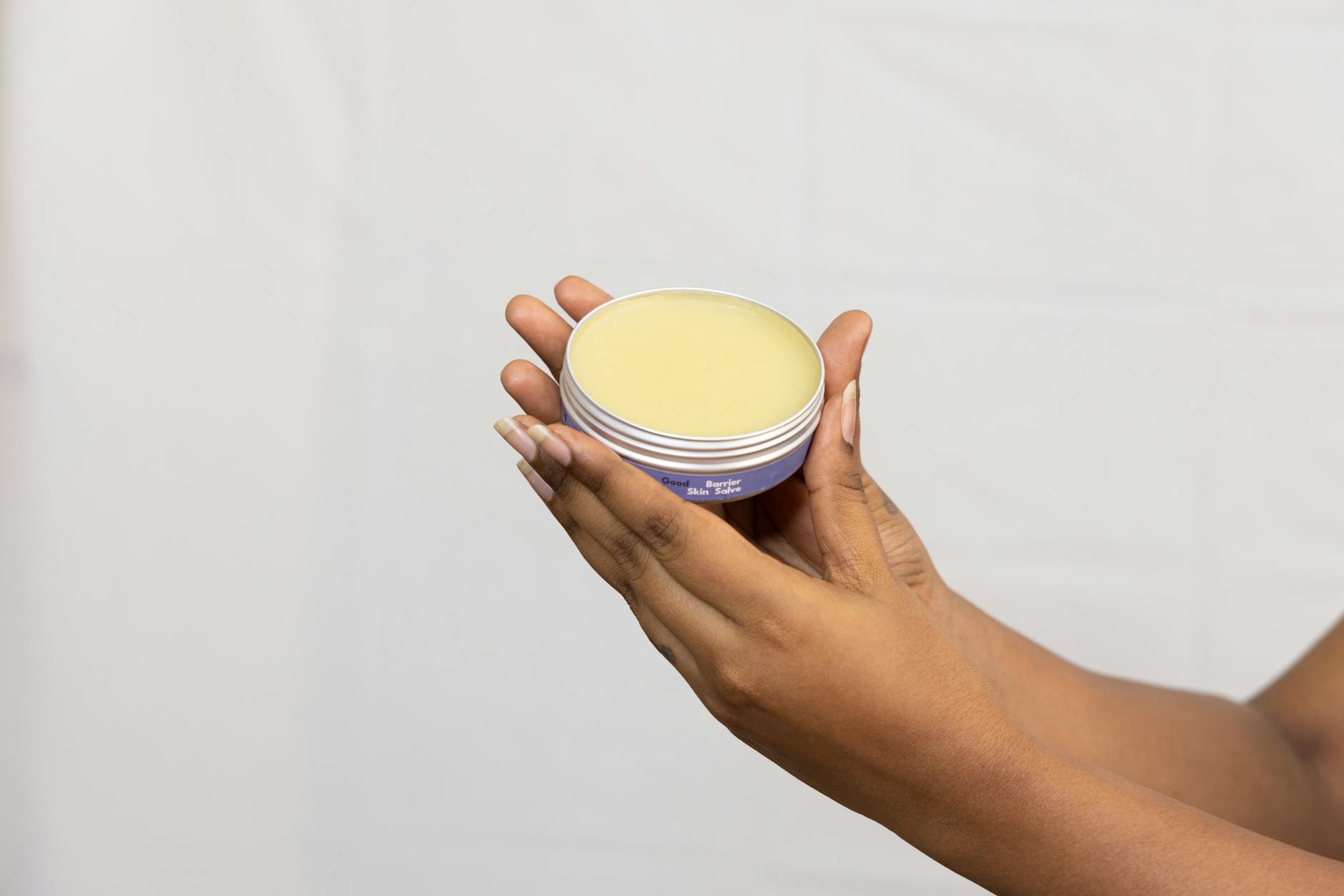
Moisturisers: Why a $12 Jar Can Beat the Designer Ceramides
Petrolatum blocks 98 to 99 percent of water loss from your skin. That plain, unglamorous ingredient sitting in the pharmacy aisle outperforms most products wrapped in sleek packaging and bold claims. The fanciest ceramide serum on the market? The clinical data is far less clear-cut. Understanding how moisturisers actually work is the best defence you have against marketing hype, and it starts with three simple mechanisms that every product relies on.
Three Ingredients, One Job
Every moisturiser on the shelf, whether it costs twelve dollars or one hundred and twenty, relies on some combination of three ingredient categories: humectants, occlusives, and emollients. The ratio changes, the marketing story changes, but the underlying science does not.
Humectants: Drawing Water into the Skin
Humectants are water magnets. These ingredients attract moisture from the environment and from deeper layers of the skin, pulling it into the stratum corneum (the outermost layer you can actually see and touch).
The most common topical humectants include glycerin, hyaluronic acid, and urea. Hyaluronic acid gets the most attention because it can hold up to 1,000 times its weight in water, which sounds extraordinary until you realise that what matters is how well it performs in a complete formulation, not in isolation.
A 2018 randomised controlled trial published in the Journal of Drugs in Dermatology found that glycerin and hyaluronic acid improved skin hydration for up to 24 hours. That is genuinely useful, but there is a catch.
In very dry or low-humidity environments, humectants can actually backfire. Without enough ambient moisture to draw from, they may pull water from the deeper layers of your skin instead, leaving the surface feeling drier than before. This is why humectants work best when paired with an occlusive layer on top.
Occlusives: Sealing Moisture In
If humectants are the sponge, occlusives are the lid. These ingredients form a physical barrier on the skin's surface that reduces transepidermal water loss (TEWL), which is the scientific term for the natural evaporation of water through your skin throughout the day.
The numbers here are striking. Research published by Sethi, Kaur, and Mahajan in the Indian Journal of Dermatology (2016) found that petrolatum reduces TEWL by 98 to 99 percent. Lanolin manages around 30 percent. Dimethicone (a silicone) sits at roughly 20 percent. Other common occlusives include mineral oil and beeswax.
Petrolatum is the gold standard of occlusives, and it has been for decades. It is not glamorous. It does not photograph well for Instagram. But no other commercially available ingredient comes close to its ability to keep moisture locked in your skin. That gap between petrolatum and everything else is worth remembering the next time a product promises "superior hydration" from a proprietary blend.
Emollients: Smoothing the Gaps
Emollients fill the cracks. Your stratum corneum is structured a bit like a brick wall: skin cells are the bricks, and lipids are the mortar holding everything together. When that mortar breaks down (from dryness, irritation, or ageing), your skin feels rough and looks flaky.
Emollients like squalane, fatty acids, and ceramides slip into those intercellular spaces and smooth things out. They contribute more to skin texture and feel than to hydration per se. Your skin feels softer and looks more even, but emollients alone are not doing much to prevent water loss.
It is worth noting that many moisturiser ingredients serve dual roles. Ceramides, for example, function as both emollients and barrier-supporting lipids. Lanolin acts as both an occlusive and an emollient. The categories are useful for understanding how moisturisers work, but real formulations blur the lines.
How the Three Work Together
Humectants attract water, emollients smooth the skin surface, and occlusives prevent water from escaping. Knowing what each does on its own matters less than understanding how the three combine.
The Layering Logic
The most effective moisturisers combine all three categories. Think of it as a layering system. The humectant draws water into the outer skin layers. The emollient smooths and softens the skin surface.
The occlusive then seals everything in, preventing that hard-won moisture from evaporating. This is why a single-ingredient product rarely delivers the same results as a well-formulated moisturiser. A hyaluronic acid serum without an occlusive layer may hydrate briefly, then leave your skin worse off. As the StatPearls overview of emollients and moisturisers (2024) explains, the best formulations balance all three mechanisms to support the skin barrier as a whole.
Reading an Ingredient List
You do not need a chemistry degree to decode a product label. Here is a practical starting point.
Common humectants you will see listed: glycerin (or glycerol), hyaluronic acid (sodium hyaluronate), urea, panthenol, aloe vera.
Common occlusives: petrolatum, mineral oil, dimethicone, beeswax, lanolin, shea butter.
Common emollients: squalane, isopropyl palmitate, capric/caprylic triglycerides, ceramides, jojoba oil.
One more thing: ingredient order matters. In Australia, cosmetic ingredient lists are ranked by concentration. If glycerin appears second on the list, there is a meaningful amount. If it appears fifteenth, it is likely present in trace quantities. The first five to seven ingredients tell you most of what you need to know about what the product will actually do for your skin.
Does "Medical-Grade" Mean Better? Marketing Claims vs Australian Regulation
"Medical-grade" is one of the most effective marketing terms in skincare. It sounds authoritative. It implies clinical backing. And in Australia, it means absolutely nothing in regulatory terms.
Why No Australian Regulator Certifies "Medical-Grade"
The Therapeutic Goods Administration (TGA) classifies products as either cosmetics or therapeutic goods. There is no intermediate "medical-grade" category, and no Australian regulator defines, certifies, or enforces the term. As cosmetic chemist Michelle Wong of Lab Muffin Beauty Science has pointed out, any company can use "medical-grade" on their packaging without meeting any additional standard.
So what should you look for instead? Evidence. Does the product contain well-studied ingredients at effective concentrations? Are there published clinical trials supporting its claims? Those questions matter far more than any marketing label.
Cosmetic vs Therapeutic Goods in Australia
The TGA framework draws a clear line. If a product claims to treat or prevent a disease or condition, it may need registration as a therapeutic good. Most moisturisers are classified as cosmetics, which means they are regulated for safety (they must not cause harm) but not for efficacy (they do not have to prove their claims actually work).
This distinction matters for you as a consumer. A moisturiser claiming to "hydrate skin" is making a cosmetic claim. One claiming to "treat eczema" is potentially making a therapeutic claim and should be backed by evidence and potentially registered with the TGA. If it is not registered, that claim is worth questioning.
How to Choose the Best Moisturiser for Your Skin Type
Knowing the science is useful, but you still need to pick a product. Here is how to match moisturiser ingredients to what your skin actually needs.
Dry or Dehydrated Skin
If your skin feels tight, flaky, or rough, you want a formulation that prioritises humectants and heavier occlusives. Look for products containing glycerin or hyaluronic acid paired with petrolatum, shea butter, or lanolin.
Ceramide-containing moisturisers are trending, and there is some reason for optimism. A 2023 systematic review published in the International Journal of Molecular Sciences examined the evidence for ceramide supplementation in skincare and found the results trending toward efficacy, but the authors noted that the clinical evidence remains mixed and more rigorous trials are needed.
The American Academy of Dermatology (AAD) recommends fragrance-free formulations for dry or sensitive skin, and that is solid, straightforward advice. Fragrance is one of the most common causes of contact irritation, and it adds nothing to a product's performance.
Oily or Acne-Prone Skin
Can moisturiser make oily skin worse? It is a common concern, but the answer is generally no, provided you choose the right formulation. Oily skin still loses water through the skin surface, and a compromised barrier can actually trigger more oil production as your skin tries to compensate.
The key is choosing lightweight, non-comedogenic formulations. Gel or lotion vehicles tend to work better than heavy creams. Look for humectant-forward products featuring glycerin or niacinamide, without heavy occlusives like petrolatum or mineral oil.
Yes, oily skin still benefits from moisturising. The goal is hydration without congestion.
Sensitive or Compromised Skin Barrier
If your skin is reactive, irritated, or recovering from treatments, the priority is skin barrier repair with the gentlest possible formulation. Minimal ingredient lists are your friend. Avoid fragrance, essential oils, and strong active ingredients.
Ceramides, cholesterol, and fatty acids mimic the natural lipid composition of the stratum corneum and can support barrier restoration. Look for products specifically formulated for barrier repair; they tend to keep their ingredient lists short and focused. For more on building a gentle routine, our guide to cleansers covers how to choose products that support (rather than strip) your skin barrier.
Does Everyone Need a Moisturiser?
Not necessarily. The honest answer depends on your skin, your environment, and what else you are doing to it.
When You Might Not Need One
If you have healthy, well-balanced skin and live in a humid climate, your skin may do a perfectly adequate job of maintaining its own moisture levels. Some dermatologists, including Dr. Rachael Cayce as cited by the Cleveland Clinic (2024), have noted that habitual over-moisturising may reduce the skin's natural drive to produce its own protective lipids.
This area of research is still developing, but it is a useful counterpoint to the idea that everyone needs to moisturise every day without exception.
When a Moisturiser Is Essential
There are situations where moisturising is not optional. If you are using active treatments like retinoids or chemical exfoliants, your skin barrier is under deliberate stress and needs support. Dry climates or heavily air-conditioned environments increase transepidermal water loss significantly.
As skin ages, natural lipid production declines, making external moisturisation more important. If you are undergoing or recovering from cosmetic procedures (chemical peels, laser treatments), a good moisturiser is a core part of your post-treatment care. Your practitioner should guide you on the right product for your specific situation.
Does Price Determine Moisturiser Quality?
This is one of the most-asked questions in skincare, and the answer is refreshingly simple: no, not necessarily.
As the Paula's Choice research team has noted, a moisturiser's effectiveness depends on its active ingredients, their concentrations, and the stability of the overall formulation. Price reflects many things (branding, packaging, marketing spend, retail margins) but it is not a reliable indicator of how well a product will perform on your skin.
According to Grand View Research (2025), the global moisturiser market is valued at over $11 billion. That is a lot of money flowing toward marketing, and much of it is designed to convince you that more expensive means more effective. It does not.
The practical takeaway: read the ingredient list, not the price tag. A well-formulated moisturiser with glycerin, petrolatum, and ceramides from the pharmacy shelf can outperform a luxury product with a beautiful jar and a forgettable formula.
The Short Version
You do not need buzzwords, influencer endorsements, or "medical-grade" labels to find a moisturiser that works. Humectants draw water in, emollients smooth the surface, and occlusives keep everything sealed. That is the whole story.
If you are considering treatments that affect your skin barrier, a consultation with an AHPRA-registered practitioner can help you build a skincare routine grounded in evidence, not marketing. Your skin deserves better than a good story on a label.
This content is for general educational purposes only and does not constitute medical advice, diagnosis, or treatment. Always consult a qualified, AHPRA-registered health practitioner before undergoing any cosmetic procedure. Individual results vary; outcomes shown or described may not reflect your experience. All cosmetic procedures carry risks.
Sources
- Sethi, A., Kaur, T., & Mahajan, B. (2016). Moisturizers: The Slippery Road. Indian Journal of Dermatology, 61(3), 279-287. https://www.ncbi.nlm.nih.gov/pmc/articles/PMC4885180/
- Guenther, L., et al. (2018). Glycerin and Hyaluronic Acid Effects on Skin Hydration. Journal of Drugs in Dermatology, 17(4). https://pubmed.ncbi.nlm.nih.gov/29601622/
- Purnamawati, S., et al. (2017). The Role of Moisturizers in Addressing Various Kinds of Dermatitis. Clinical Medicine & Research, 15(3-4), 75-87. https://www.ncbi.nlm.nih.gov/pmc/articles/PMC5849435/
- StatPearls (2024). Emollients. National Library of Medicine. https://www.ncbi.nlm.nih.gov/books/NBK526117/
- Wong, M. (Lab Muffin Beauty Science). What Does "Medical Grade" Skincare Mean? https://labmuffin.com/what-does-medical-grade-skincare-mean/
- American Academy of Dermatology. Moisturizer: Why You May Need It If You Have Acne. https://www.aad.org/public/diseases/acne/skin-care/moisturizer
- Therapeutic Goods Administration (TGA). Cosmetics and Therapeutic Goods. https://www.tga.gov.au/resources/resource/guidance/cosmetics-and-therapeutic-goods
- International Journal of Molecular Sciences (2023). Ceramides in Skin Barrier Function: A Systematic Review. https://www.ncbi.nlm.nih.gov/pmc/articles/PMC10049458/
- Paula's Choice. How to Choose the Best Moisturizer for Your Skin. https://www.paulaschoice.com/expert-advice/skincare-advice/moisturizers/how-to-choose-the-best-moisturizer.html
- Cleveland Clinic (2024). Can You Over-Moisturize Your Skin? https://health.clevelandclinic.org/is-moisturizer-bad-for-your-skin
- Grand View Research (2025). Moisturizing Cream Market Size, Share & Trends Analysis Report. https://www.grandviewresearch.com/industry-analysis/moisturizing-cream-market
Photos by The Good Hygiene Co., Antoni Shkraba Studio, and SHVETS production on Pexels