
Post-Procedure Skincare: A Phase-by-Phase Guide to What Your Skin Needs (and What to Avoid)
Your skin barrier is temporarily vulnerable after a cosmetic procedure. This phase-by-phase guide covers which ingredients help recovery, which ones to avoid, and when to safely resume your normal routine.
- skincare
- topical-products
- safety

Post-Procedure Skincare: A Phase-by-Phase Guide to What Your Skin Needs (and What to Avoid)
After a cosmetic procedure, your skin barrier is open. Microchannels created by microneedling, inflammation triggered by laser energy, or injection sites from cosmetic injectables all create a temporary window of vulnerability. That retinol, vitamin C serum, or chemical exfoliant that works beautifully on intact skin can cause significant irritation, prolonged redness, or post-inflammatory hyperpigmentation on compromised skin. Post-procedure skincare is not about buying premium recovery products or investing in branded "healing kits." It is about understanding what your skin can and cannot tolerate while it heals, and when.
Getting this right makes a meaningful difference to your results. The good news is that the evidence-based approach is straightforward, affordable, and does not require a cupboard full of specialty products.
What Skincare Should I Use After a Cosmetic Procedure?
The "Kind and Gentle" Principle
Dermatologists across multiple jurisdictions agree on the fundamentals of post cosmetic procedure recovery. As dermatologist Dr. Lehmer of Newport Beach Dermatology puts it, aftercare can be summarised in two words: "kind and gentle." That phrase captures the entire philosophy. When your skin barrier is compromised, microchannels are open, sensitivity is heightened, and your skin's natural defences are temporarily reduced. Everything you apply has a faster, more direct route into deeper tissue layers.
The three goals during recovery are simple: keep the surface clean, rebuild barrier lipids, and avoid anything that increases heat, friction, or irritation. If a product stings, tingles, or causes redness on healing skin, it is working against you, not for you.
Phase-Based Recovery Timeline
Rather than guessing when to reintroduce products, it helps to think about recovery in three distinct phases.
Phase 1 (0 to 48 hours): Protection only. This is when your skin is most vulnerable. Stick to bland ointments like plain petrolatum and cool water only. No cleansers, no active ingredients, no makeup. The goal is to let the initial healing response proceed without interference. If your practitioner provides a specific post-procedure ointment, use that and nothing else.
Phase 2 (Days 3 to 7): Gentle barrier support. Once the initial inflammation settles, you can introduce a gentle, fragrance-free cleanser and a barrier repair moisturiser containing ceramides. A topical hyaluronic acid serum is appropriate at this stage and will help with hydration. Mineral sunscreen becomes essential the moment you have any sun exposure.
Phase 3 (Days 7 to 10 and beyond): Gradual resumption. Now you can begin reintroducing your normal skincare routine. The key word is "gradual." Bring back actives one at a time, starting with the gentlest, and watch for any signs of sensitivity.
These timelines vary by procedure type and intensity. Your practitioner's specific instructions always take priority over general guidance.
What Ingredients Should I Avoid After a Procedure?
The 5 to 7 Day Avoidance List
Certain ingredients that are beneficial on healthy skin become problematic on a compromised barrier. For at least five to seven days after most procedures, practitioners commonly advise avoiding the following.
Retinoids (tretinoin, retinol, adapalene) increase cell turnover and sensitivity. On already-compromised skin, they can cause excessive peeling, redness, and delayed healing. For a deeper look at how retinoids work and when they are appropriate, see our guide on retinoids in skincare.
AHAs and BHAs (glycolic acid, salicylic acid) are chemical exfoliants. Applying them to a damaged barrier is essentially exfoliating skin that is already raw, which causes irritation and slows recovery. Our article on exfoliants covers when these ingredients are beneficial on intact skin.
Benzoyl peroxide is both drying and irritating. It strips moisture from skin that desperately needs to retain it.
Hydroquinone can paradoxically cause post-inflammatory hyperpigmentation on sensitised skin, the exact opposite of what most people use it for. Our guide on pigment modulation products explores safer timing for these ingredients.
Vitamin C serums (specifically L-ascorbic acid at low pH) are acidic formulations that irritate compromised barriers. If you are wondering "Can I use vitamin C after microneedling?" the short answer is: not in the first week. Wait until your barrier has re-established itself before reintroducing it. Our vitamin C guide covers formulation types and appropriate use in detail.
Why Practitioners Often Advise Against NSAIDs
This one surprises people. Many practitioners advise avoiding anti-inflammatory medications like ibuprofen and aspirin for approximately one week after cosmetic procedures. The reasoning is counterintuitive: the inflammatory response after a procedure is part of the healing process. It signals the body to send repair cells to the treated area. Suppressing that response may slow recovery.
Practitioners commonly suggest paracetamol as an alternative for managing discomfort. However, pain management is a medical decision. Always check with your practitioner about what is appropriate for your specific procedure and medical history.
Skincare After Laser Treatment and Microneedling: What Actually Helps
Barrier Repair After Treatment: Ceramides and Lipids
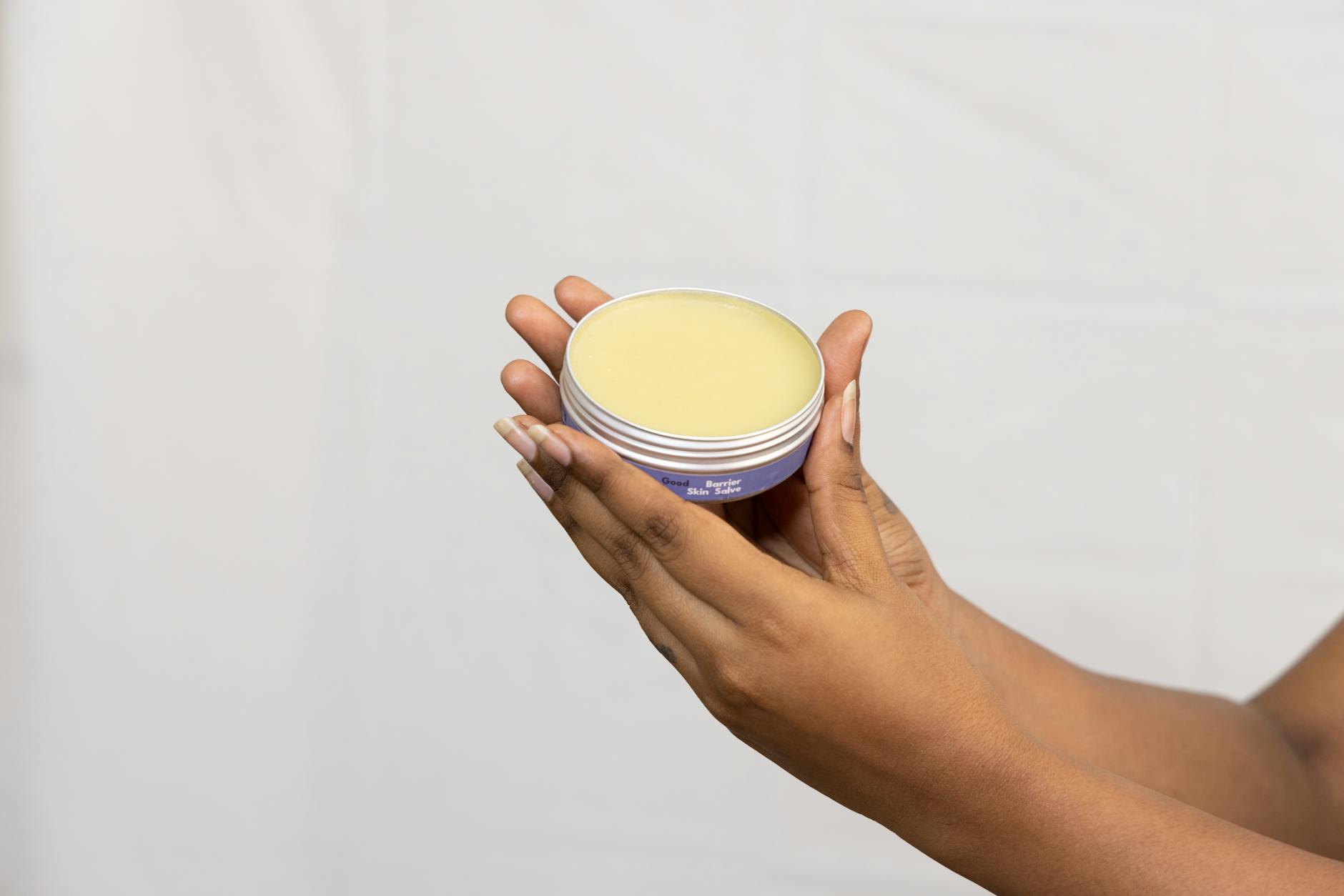
When it comes to barrier repair after treatment, ceramides are the standout ingredient supported by clinical evidence. A 2015 study published in the Journal of Drugs in Dermatology found that ceramide-containing formulations significantly reduced skin irritation and redness following laser treatments compared to standard moisturisers. Separate research published in the International Journal of Cosmetic Science (2012) demonstrated that ceramide-based moisturisers measurably improve skin hydration within 24 hours of application.
The reason ceramides work so well is that they are a natural component of your skin barrier. Along with cholesterol and fatty acids, they form the lipid matrix that holds your barrier together. When a procedure disrupts that matrix, replacing those lipids directly accelerates repair. A moisturiser containing the complete lipid trio of ceramides, cholesterol, and fatty acids gives your skin the building blocks it needs to rebuild. Our guide on barrier repair products covers the science of this lipid trio in detail.
Plain petrolatum also deserves a mention. It is not glamorous, but research published in the Journal of the American Academy of Dermatology has demonstrated that petrolatum occlusion prevents approximately 98% of trans-epidermal water loss (TEWL), making it one of the most effective occlusive barriers available. In the first 48 hours, a thin layer of petrolatum may be the most effective thing you can apply.
Topical Hyaluronic Acid: Hydration Without Barrier Repair
Topical hyaluronic acid (the kind found in skincare serums, distinct from injectable formulations) is well-tolerated on post-procedure skin and provides effective hydration. Park Avenue Dermatology recommends using a topical hyaluronic acid serum and gentle moisturiser several times daily after a procedure. The humectant draws water to the skin surface, plumping and hydrating tissue that has lost moisture through the disrupted barrier.
There is an important limitation to understand, though. Topical hyaluronic acid does not rebuild barrier structure. It draws water to the surface but does not replace the lost lipids that actually hold the barrier together. It works best when sealed with barrier lipids (ceramides, cholesterol, and fatty acids) that retain the hydration it provides. Think of hyaluronic acid as the water and ceramide moisturiser as the container that keeps it there. For a deeper look at how this ingredient works, see our guide on topical hyaluronic acid.
Mineral Sunscreen: Non-Negotiable
Mineral-based SPF 30 or higher using zinc oxide or titanium dioxide is critical immediately post-procedure. This is genuinely non-negotiable. Post-procedure skin is significantly more susceptible to UV damage, and sun exposure during recovery is one of the most common causes of post-inflammatory hyperpigmentation.
Reapply every 60 to 90 minutes during any outdoor exposure. If you are asking "What sunscreen should I use after a procedure?" the answer is mineral only until your barrier integrity is fully restored. Chemical sunscreens (also called organic UV filters) should be avoided in the immediate recovery period because the active chemical compounds can irritate compromised skin. Once your barrier has healed, you can switch back to whatever sunscreen you normally prefer. Our sunscreen guide covers the differences between mineral and chemical formulations in detail.
Do I Need Special Products After Cosmetic Procedures?
What the Evidence Supports
The genuinely evidence-based post-procedure skincare needs are simple: a gentle cleanser, a ceramide-based barrier moisturiser, a bland occlusive like petrolatum, and a mineral sunscreen. That is the core toolkit. These are widely available products. They do not require premium pricing or branded "recovery kits."
Clinical evidence supports the use of ceramides, petrolatum, topical hyaluronic acid, and mineral SPF for post-procedure recovery. It does not support branded "post-procedure serums" with proprietary ingredient lists and premium price tags.
When Marketing Exceeds the Evidence
Some brands market premium post-procedure product lines as essential for proper recovery. The packaging is clinical, the language is authoritative, and the price reflects it. In many cases, however, simpler formulations provide equivalent or superior barrier repair.
A well-formulated ceramide moisturiser and a mineral sunscreen cover the core needs for most people after most procedures. As Advanced Skin Therapeutics puts it, the priority is "keeping the surface clean, rebuilding natural lipids, and avoiding anything that increases heat or friction." You do not need a seven-step branded recovery protocol to achieve that.
That said, practitioner-recommended products may have genuine clinical rationale. If your practitioner suggests a specific product, ask why it is recommended rather than assuming a branded line is either necessary or unnecessary. Understanding the reasoning helps you make informed decisions about where to spend your money.
How Long Does Skin Take to Heal After a Procedure?
Recovery by Procedure Type
Healing timelines vary significantly depending on what was done.
Cosmetic injectables cause minimal barrier disruption. Most people return to their normal skincare within 24 to 48 hours, though injection sites should be kept clean and you should avoid heavy pressure on treated areas.
Microneedling typically requires five to seven days for barrier recovery. Redness subsides within two to three days for most people, though the barrier continues repairing beneath the surface after visible redness resolves.
Laser treatments vary the most. Superficial, non-ablative treatments generally need five to seven days. Ablative laser treatments can require 10 to 14 days or longer for full barrier recovery, and the skincare restrictions are more stringent during that period.
Chemical peels usually require around two weeks of restricted skincare. The active peeling phase typically occurs between days three and seven, and the temptation to pick or exfoliate during that phase should be firmly resisted.
When Can I Resume My Normal Routine?
Two of the most common questions people ask are "How long after laser treatment can I use retinol?" and "When can I wear makeup after a cosmetic procedure?"
For retinol and other actives, the typical guidance is 7 to 14 days depending on the procedure's intensity. Ablative treatments sit at the longer end of that range. When you do start reintroducing actives, bring them back one at a time. This way, if sensitivity develops, you can identify exactly which product caused it.
For makeup, the general guidance is 24 hours minimum, and longer for ablative procedures. Mineral makeup is usually better tolerated than liquid formulations in the early recovery days.
If you reintroduce something and irritation returns, that is your skin telling you the barrier is not yet ready. Pull back, return to your basic barrier repair routine, and try again in a few days.
Moving Forward With Confidence
Post-procedure skincare does not need to be complicated or expensive, but it does need to be deliberate. The evidence supports a simple approach: keep it clean, rebuild the barrier with ceramides and lipids, protect from the sun with mineral SPF, and leave the actives alone until your skin has healed. Your practitioner's specific aftercare instructions should always come first.
If you are planning a cosmetic procedure through Cosmabl, your AHPRA-registered practitioner will provide tailored aftercare guidance for your treatment. The principles in this guide give you the background knowledge to understand why those instructions matter and to make informed decisions about what goes on your skin during recovery.
This content is for general educational purposes only and does not constitute medical advice, diagnosis, or treatment. Always consult a qualified, AHPRA-registered health practitioner before undergoing any cosmetic procedure. Individual results vary; outcomes shown or described may not reflect your experience. All cosmetic procedures carry risks.
Sources
- Dr. Lehmer, Newport Beach Dermatology, on post-procedure aftercare principles: https://www.newportbeachdermatology.com/post-procedure-care
- Park Avenue Dermatology, post-procedure skincare recommendations: https://www.parkavedermatology.com/post-procedure-skincare
- Advanced Skin Therapeutics, post-procedure care priorities: https://www.advancedskintherapeutics.com/aftercare-guide
- Draelos, Z.D. (2015). "The effect of ceramide-containing skincare products on post-procedure recovery." Journal of Drugs in Dermatology, 14(11).
- Mao-Qiang, M. et al. (2012). "Ceramide-dominant barrier repair lipids improve skin hydration and barrier function." International Journal of Cosmetic Science, 34(5).
- Ghadially, R. et al. (1992). "The aged epidermal permeability barrier: basis for functional abnormalities." Journal of the American Academy of Dermatology, 26(3). (Petrolatum occlusion and TEWL prevention data.)
Photos by Gustavo Fring, The Good Hygiene Co., and Tara Winstead on Pexels