
Compounded Skincare Products: When They're Worth It, What the Risks Are, and How Australia Regulates Them
Independent testing found that 27% of compounded medications failed potency standards. That does not make them bad. It means compounded skincare products occupy a different quality tier, and understanding the difference helps you make an informed decision.
- skincare
- topical-products
- safety
Compounded Skincare Products: When They're Worth It, What the Risks Are, and How Australia Regulates Them
Independent testing found that 27% of compounded medication samples failed potency standards, and 53% had impurity levels exceeding those allowed in approved commercial products. Both figures come from the same peer-reviewed analysis published in the International Journal of Pharmaceutical Compounding in 2013. They do not mean compounded skincare products are inherently dangerous. They mean these products occupy a different quality tier than the mass-manufactured prescriptions or over-the-counter items most consumers are familiar with.
Compounded topicals fill a genuine clinical gap. Sometimes a commercial product simply does not exist at the concentration, combination, or formulation a patient needs. But understanding what compounded skincare actually is, and what it is not, helps you make a much more informed decision when your practitioner recommends one. Here is a straightforward look at how compounding works, when it is clinically justified, what the real risks are, and how Australian regulation applies.
What Are Compounded Skincare Products?
How Compounding Works
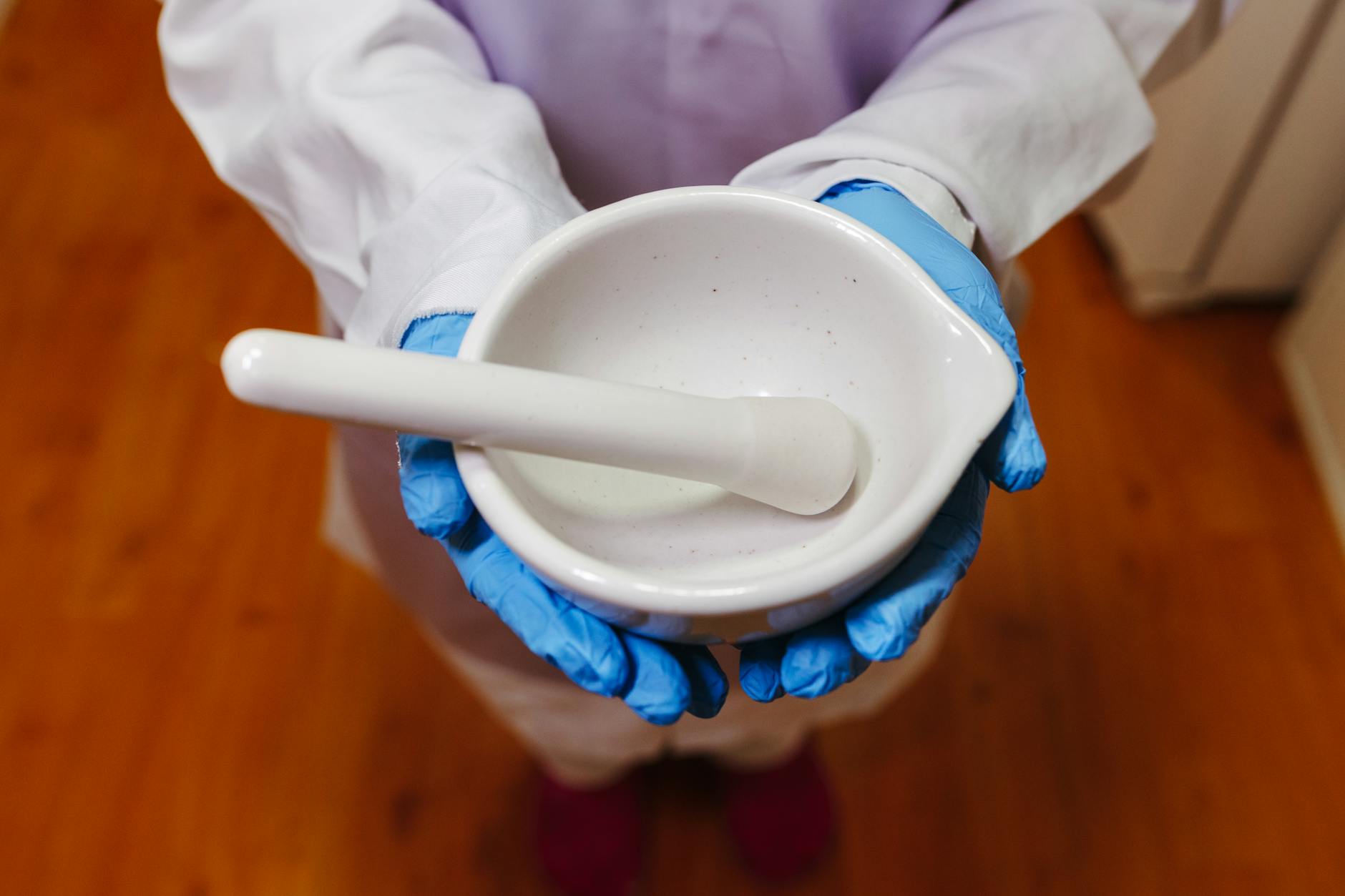
A compounding pharmacist prepares a custom formulation for an individual patient based on a prescription from a registered practitioner. The pharmacist combines active ingredients (such as tretinoin, hydroquinone, or corticosteroids) in a chosen vehicle like a cream, gel, or ointment at a specified concentration. Every batch is made for one patient's specific needs, not manufactured at scale for retail shelves.
This is not a new concept. Compounding was the standard way medicines were prepared before large-scale pharmaceutical manufacturing became the norm. Today, custom skincare formulations serve a more targeted role: filling gaps where commercially available products fall short for a particular patient.
What Is the Difference Between Compounded and Commercial Skincare?
This is one of the most common questions people ask, and the distinction matters quite a bit. Commercial skincare products are manufactured at scale and evaluated by the TGA (Therapeutic Goods Administration) for safety, quality, and efficacy. They are listed on the Australian Register of Therapeutic Goods (ARTG) and subject to standardised stability and potency testing before they reach you.
Compounded skincare products sit in a different category. Under Australian law, they are classified as "unapproved" therapeutic goods and exempt from ARTG listing when prepared for an individual patient. In plain terms, the TGA does not review them the way it reviews a product you would buy off the pharmacy shelf. That does not automatically mean they are unsafe. It means the quality assurance comes from the individual compounding pharmacy rather than a centralised approval process.
Think of it this way: a commercial product has passed a standardised exam before it reaches the shelf. A compounded product relies on the skill and standards of the pharmacy that makes it. Both can be excellent, but the path to quality is different.
Why Would a Doctor Prescribe a Compounded Cream?
When Commercial Products Cannot Meet the Need
There are several legitimate clinical scenarios where compounding is the most practical or only option. Custom concentrations are a common reason. A practitioner may need a higher-strength tretinoin cream or hydroquinone formulation beyond what is commercially available. A compounded tretinoin cream, for example, can be prepared at concentrations tailored specifically to a patient's skin tolerance and treatment goals. If you want to understand the broader landscape of prescription retinoids versus over-the-counter options, our guide to retinol vs tretinoin covers the clinical evidence and Australian prescription rules.
Combination formulations are another common use. For conditions like melasma, a practitioner might prescribe hydroquinone, tretinoin, and a corticosteroid combined in a single cream. This reduces the number of products a patient needs to apply and can improve adherence to the treatment plan. Our article on hyperpigmentation treatment explores the evidence for these individual ingredients in more detail.
Allergen-free bases also drive compounding prescriptions. Some patients react to specific excipients in commercial products, such as certain fragrances, preservatives, or dyes. A compounding pharmacy can prepare the same active ingredient in a base that avoids the problematic component.
Discontinued medications are the fourth common reason. When a commercial product is no longer manufactured but the active ingredient remains available, compounding provides continued access to a treatment that still works.
When Compounding Is Not Necessary
If a commercial product exists at the needed concentration and formulation, it is generally the preferable choice. Commercial products undergo standardised quality testing that compounded products do not. "Custom" does not automatically mean "better." As US Pharmacist noted in a 2018 review, compounding has "legitimate, important clinical applications," but quality control remains pharmacy-dependent.
The key question to ask is whether a commercial alternative would work just as well. If the answer is yes, the commercial product offers a more consistent quality guarantee. If the answer is no, compounding fills the gap.
Are Compounded Creams Safe?
The Two Primary Risks
Two issues come up most often in the clinical literature on compounded topicals: potency variability and contamination.
Potency variability means the actual concentration of the active ingredient in your compounded product may differ from what was prescribed. A 2013 analysis published in the International Journal of Pharmaceutical Compounding found that 27% of compounded medication samples failed potency standards. In practical terms, you may receive more or less active ingredient than your practitioner intended. Too much could cause irritation or adverse effects; too little could mean the treatment simply does not work.
Contamination is the second risk. Compounding pharmacies do not operate under the same sterile manufacturing environments as large-scale commercial facilities. For topical skincare products, the risk is lower than for sterile injectables, but it is not zero. A 2025 review published in PubMed Central noted that safety concerns persist due to "lesser regulatory oversight" compared to approved commercial products.
Stability and Shelf Life
Commercial products undergo rigorous stability testing to confirm how long they remain effective and safe to use. Compounded products are not required to meet the same stability testing standards. This means the shelf life and potency of a compounded cream over time are less certain. The product may degrade faster than expected.
Australian Prescriber has noted that "formulation stability, potency, and sterility are not independently verified" for compounded products. Medicines Australia raised similar concerns in its 2023 position statement, highlighting that "risks associated with compounded medicines include microbial contamination, incorrect potency, and product instability." These are not scare tactics. They are factual descriptions of a different quality assurance profile.
Putting the Risk in Context
Context matters here. The most widely publicised compounding safety incident, the 2012 contamination case in the United States that caused over 700 infections and 64 deaths, involved sterile injectable medications, not topical creams. The risk profile for topical skincare products is meaningfully lower.
A well-run compounding pharmacy with proper quality controls produces reliable products. The issue is not that compounding is inherently dangerous. It is that quality is variable and depends on the individual pharmacy's practices, equipment, and standards. For topical skincare, the practical risk is primarily incorrect potency (receiving too much or too little active ingredient) rather than acute safety events. If you are concerned about how a compounded cream interacts with the rest of your routine, particularly after a cosmetic procedure, our post-procedure skincare guide walks through ingredient timing in detail.
Are Compounded Medications Regulated in Australia?
The TGA Framework
Compounding pharmacy skincare products operate within a specific regulatory framework in Australia, though it looks quite different from the framework governing commercial products. The TGA exempts compounded medicines from ARTG listing when they are prepared for a specific individual patient. Bulk compounding for stock is not permitted under this exemption.
Components used in compounding must comply with TGA quality standards, and complex compounding (involving specialised techniques or equipment) requires specific facilities and training. However, the finished compounded product itself is not evaluated by the TGA for efficacy. The regulatory focus is on the compounding process and inputs rather than the final product.
Pharmacy Board of Australia Guidelines (Updated August 2024)
The regulatory landscape for compounded topicals in Australia is evolving, and that is a good thing for consumers. The Pharmacy Board of Australia updated its compounding guidelines in August 2024, introducing clearer requirements for complex compounding facilities and self-inspection protocols.
The updated guidelines distinguish between simple compounding (basic reconstitution and mixing) and complex compounding (which requires specialised equipment and additional training). Pharmacies must comply with these guidelines to continue offering compounding services. The 2024 update reflects growing regulatory attention to compounding quality in Australia and signals that standards are tightening.
How Do I Know If My Compounded Cream Is Good Quality?
Questions to Ask Your Compounding Pharmacist
If your practitioner prescribes a compounded skincare product, you can take an active role in assessing quality. Here are the questions worth asking your compounding pharmacist:
- Does the pharmacy hold relevant accreditation or licensing for complex compounding? Accredited pharmacies have demonstrated compliance with higher standards.
- What quality controls are in place? Ask specifically about potency testing and contamination checks on finished products.
- What is the expected shelf life, and how should the product be stored? Proper storage is critical for maintaining potency.
- Can the pharmacy provide a certificate of analysis for the batch? This documents the actual concentration of active ingredients in your specific product.
- How are ingredients sourced and verified? Quality inputs matter for a quality output.
When to Choose Compounded vs Commercial
The decision framework is relatively straightforward. If a commercial equivalent exists at the right concentration and formulation, choose the commercial product. It comes with more rigorous quality assurance built into the process.
If your practitioner prescribes a compounded product, ask why the commercial alternative is not suitable. There should be a clear clinical reason. Look for pharmacies that voluntarily exceed minimum standards, such as those that conduct independent potency testing or maintain stability data on their formulations.
A compounded topical prescribed by an AHPRA-registered practitioner who works with a quality compounding pharmacy is a reasonable choice. The combination of clinical judgment and pharmacy quality controls provides a meaningful layer of assurance.
Making an Informed Decision About Compounded Skincare
Compounded skincare products serve a real clinical need that commercial products cannot always address. Custom concentrations, combination formulations, allergen-free bases, and access to discontinued ingredients all represent legitimate reasons your practitioner might recommend a compounded topical.
The key takeaway is that "compounded" means a different quality profile, not automatically a better or worse one. The reliability of the product depends heavily on the compounding pharmacy that makes it. Quality varies, and that variability is the core issue worth understanding.
If your practitioner recommends a compounded skincare product, ask the questions that help you assess quality. An AHPRA-registered practitioner can explain why a compounded formulation is the right choice for your skin and help you find a reputable compounding pharmacy. Informed patients get better outcomes, and that starts with understanding exactly what you are putting on your skin.
This content is for general educational purposes only and does not constitute medical advice, diagnosis, or treatment. Always consult a qualified, AHPRA-registered health practitioner before undergoing any cosmetic procedure. Individual results vary; outcomes shown or described may not reflect your experience. All cosmetic procedures carry risks.
Sources
- International Journal of Pharmaceutical Compounding: Study on potency and impurity testing of compounded medications (2013) https://pubmed.ncbi.nlm.nih.gov/23461739/
- PubMed Central: Review of compounded medication safety and quality concerns (2025) https://pmc.ncbi.nlm.nih.gov/articles/PMC11835283/
- US Pharmacist: Overview of compounding pharmacy clinical applications and quality considerations (2018) https://www.uspharmacist.com/article/compounding-pharmacy-an-overview
- Australian Prescriber: Compounded medicines, quality and regulatory considerations https://www.nps.org.au/australian-prescriber/articles/compounded-medicines
- Medicines Australia: Position statement on risks of compounded medicines (2023) https://www.medicinesaustralia.com.au/policy/compounded-medicines/
- Pharmacy Board of Australia: Updated compounding guidelines (August 2024) https://www.pharmacyboard.gov.au/codes-guidelines/guidelines-compounding.aspx
- Therapeutic Goods Administration: Regulation of compounded medicines in Australia https://www.tga.gov.au/resources/resource/guidance/compounding-medicines
Photos by Jonathan Borba, Ella Wei, and cottonbro studio on Pexels